

Planning a journey to Socotra Island is unlike booking a typical holiday. Remote, wild, and otherworldly, Socotra is often described as the “Galápagos of the Indian Ocean.” Naturally, travelers have many questions before confirming their trip.
This in-depth guide expands on the FAQ section of the Best of Socotra Tour by Traveling Socotra, incorporating important pre-departure information and a recommended 7-day outline. Whether you are an adventure traveler, photographer, nature lover, or simply curious about visiting Socotra, this article answers the most important questions in detail while helping you prepare with confidence.
Is Socotra Safe to Visit?
One of the most frequently asked questions is about safety.
Short answer: Yes, Socotra has remained and still is very safe. Although Socotra is politically part of Yemen, the island is geographically and administratively separate from mainland conflict areas. Socotra has remained peaceful and continues to welcome international visitors every season. You can read more on that here.
Tourism on the island is organized and guided. Guests are accompanied by licensed local guides, drivers, and support staff throughout the trip. The local population is super welcoming and used to hosting foreign visitors.
As with any remote destination, comprehensive travel insurance is essential. Flights can occasionally be delayed or canceled due to weather or operational reasons, and medical infrastructure is limited. A policy that explicitly covers travel to Yemen/Socotra is strongly recommended.
Do I Need a Visa to Visit Socotra?
Yes, all foreign visitors require a tourist visa and we are happy to assist you with that. Simply upload your passport information after making a booking and we will do the rest. Your visa is arranged in advance and is typically issued approximately one week before departure. This timing is standard because the visa is valid for 30 days.
Important details to remember:
-
You must print your visa before traveling.
-
Immigration on arrival can take 30–60 minutes.
Having your printed visa ready will make the process smooth and straightforward.
How Do Flights to Socotra Work?
Flights to Socotra operate on a fixed seasonal schedule and function like any international flight.
Typical routing includes:
-
Departure from Jeddah (JED) around 11:00
-
Arrival in Socotra around 14:30 (3h30m flight)
-
Return departure from Socotra around 10:30
-
Arrival in Abu Dhabi around 14:00
You should arrive at the airport at least two hours early if you are staying in Jeddah, or plan enough buffer time for switching terminals. Your international flight should arrive at Terminal 1, the flight to Socotra leaves from Terminal N. You will have to go through customs to get your luggage, as that will not automatically go through.
That being said, as you have to go through customs to collect your luggage, you will also need a visa for Saudi Arabia. If you don’t have checked luggage and you are only traveling with carry-on, you can proceed without needing a visa. You can apply for an eVisa at www.visa.visitsaudi.com, it takes around 24-48 hours to be approved.
Like any international flight, cancellations are possible due to weather or operational reasons, although they are rare. This is another reason why good travel insurance is important. Once you arrive in Socotra, your guide will be waiting in the arrivals hall to begin your adventure.
What Is the Climate Like in Socotra?
Socotra has a semi-desert climate with warm temperatures year-round.
-
Daytime temperatures: 27–30°C (80–86°F)
-
Night temperatures: 21–25°C (71–78°F)
-
Humidity: 66–72%
-
Ocean temperature: 25–27°C (78–81°F)
It does not cool down dramatically at night, except in the mountains. Light, breathable clothing is ideal, and good ventilation in your tent helps ensure comfortable sleep. The warm ocean makes swimming and snorkeling a highlight of the tour.

What Types of Accommodation Are Available?
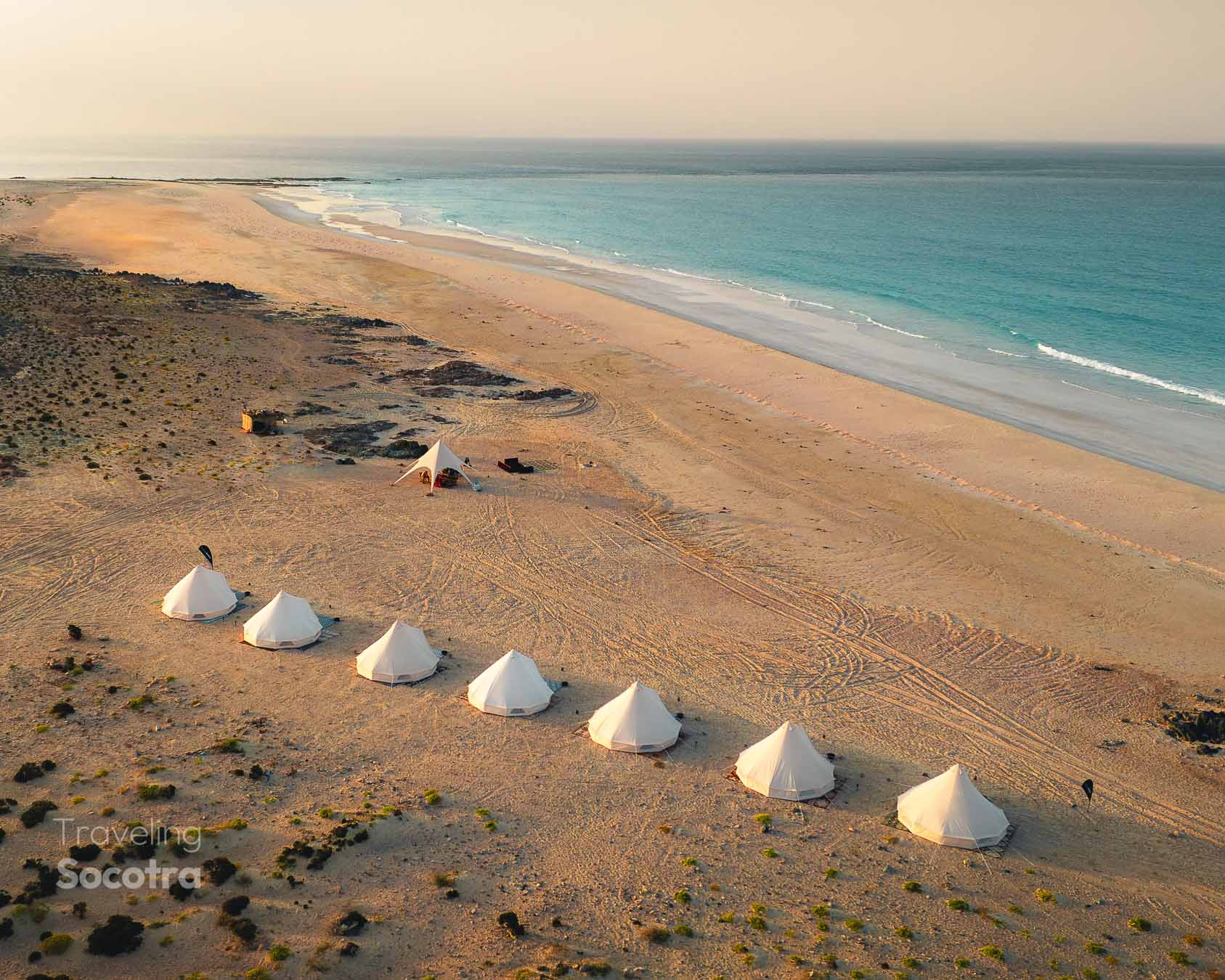
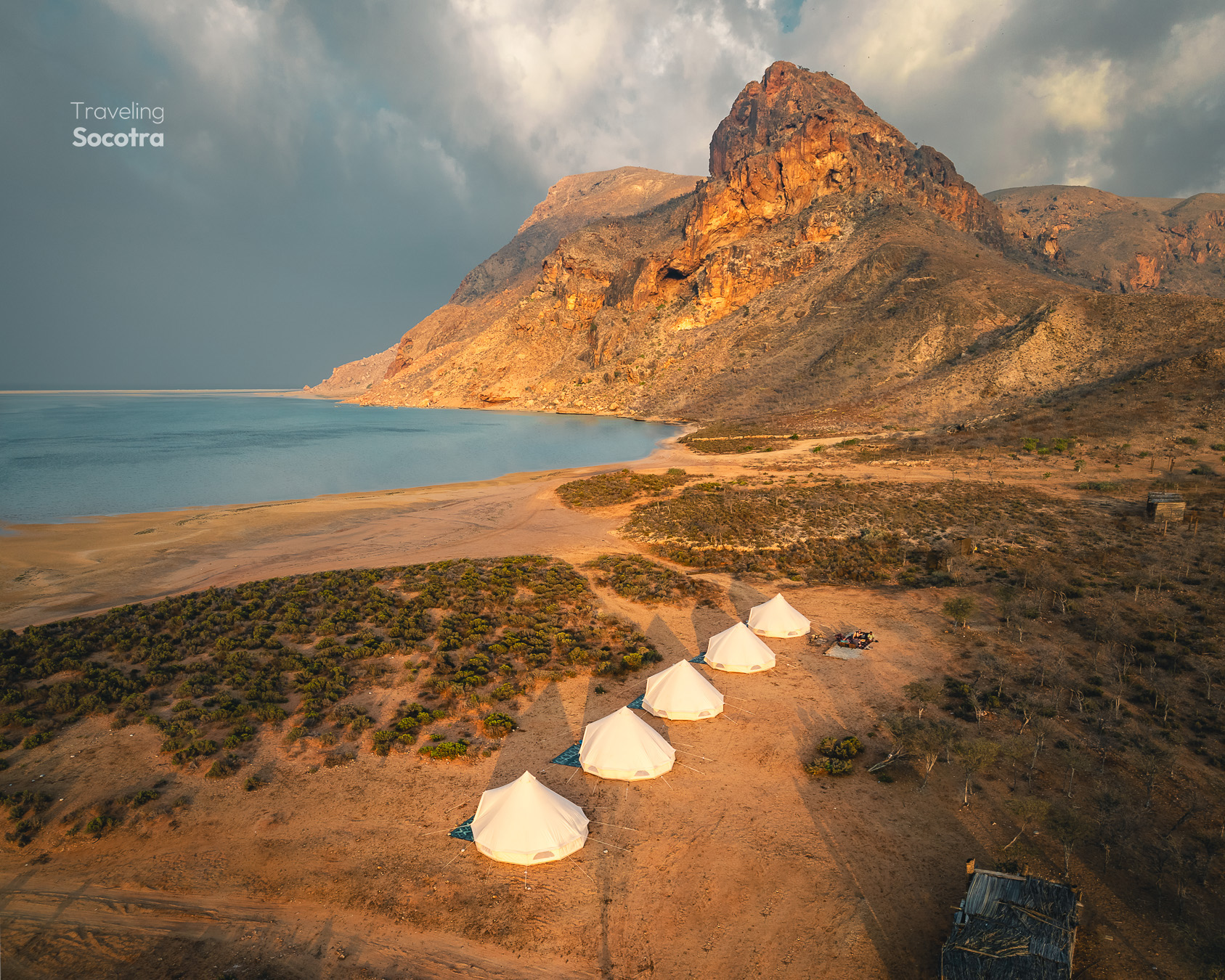
Accommodation is one of the most distinctive aspects of the Best of Socotra Tour. Instead of traditional hotels, the experience is built around immersive camping in spectacular natural locations.
Standard Tents (Included)
Every tour includes standard camping tents. These are comfortable and practical, equipped with mattresses, pillows, and blankets. They are set up and dismantled daily by the camp team.
You can read more about the differences in our blog post: Standard Tents vs. Luxury Tents.
Luxury Tents (Upgrade Option)
For travelers who prefer additional space and comfort, luxury tents are available as an upgrade. These larger tents offer:
-
Approximately 5 meters of diameter
-
Thick inflatable queen-size mattresses
-
Premium bedding
-
Extra storage space
-
Improved ventilation
Luxury tents are ideal for couples or guests seeking a more spacious camping experience.
More details are available in the same comparison article mentioned above.

Exclusive Luxury Camps (Premium Experience)
For private tours and travelers seeking a higher-end experience, exclusive luxury camps are available.
These include:
-
Premium luxury tents
-
Elegant Arabian-style dining areas
-
Wooden tables and chairs
-
Cozy lounge spaces
-
Enhanced shower and toilet facilities
-
Starlink Wi-Fi at camp
This elevated setup allows guests to enjoy wilderness immersion with additional comfort. Learn more in our blog article: Exclusive Luxury Camp.

Exclusive Campsites
In addition to tent options, we use exclusive campsites at key locations across the island. Popular areas such as Detwah Lagoon, Arher dunes, and the Dragon Blood Tree plateau can become crowded during high season.
To ensure privacy, better photography conditions, and a more serene experience, we have secured dedicated campsites for our groups only.
You can read more about this initiative in: New Exclusive Campsites.

What Is the Food Like on the Tour?
Meals are freshly prepared by a private chef three times per day. Despite the island’s remoteness, the food is hearty and satisfying.
Expect:
-
Fresh locally caught fish
-
Free-range chicken
-
Rice or pasta
-
Vegetables
-
Fresh bread
-
Eggs and beans for breakfast
Vegetarian and vegan options can be arranged in advance. Because Socotra is remote, ingredient variety is limited, but quality and freshness are prioritized. For our Luxury Camp guests, lobster is on the menu as well.

What Should I Pack for Socotra?
Proper packing is essential for comfort.
Key items include:
-
Sunglasses
-
Sun hat
-
SPF 50 reef-friendly sunscreen
-
Biodegradable wet wipes
-
Comfortable walking shoes or trekking sandals
-
Light, breathable clothing
-
Swimwear
-
Snorkel mask (optional)
-
Headlamp
-
Power bank
-
Universal adapter
-
Small daypack
-
Light sleeping bag (if sensitive to cold)
-
Secure pouch for passport and valuables
Only US dollars are accepted on the island. Notes must be from 2009, 2013, 2017 or newer. There are no reliable ATMs, and credit cards are not accepted.
Bringing emergency cash (around $500) is advisable in case of unexpected situations.
Is There Electricity or Internet?
Socotra is largely off-grid. Devices can be charged in the car while driving. If you decide to get a SIM card, keep in mind that most parts of the island do not have coverage. However, our Luxury Camps offer solar charging, a generator and Starlink internet.
Is Tipping Customary?
Yes, tipping is customary and appreciated.
A team of 7–8 staff members supports your experience, including guide, drivers, chef, kitchen assistant, camp staff, and sanitation staff. A general guideline is $100–150 per guest, depending on your satisfaction and also if you joined a group tour (more people = better tip distribution per guest) or a private tour.
Sustainability and Responsible Travel
Socotra’s ecosystem is fragile and unique.
Guests are encouraged to:
-
Use coral reef–friendly sunscreen and toiletries
-
Bring biodegradable wipes
-
Leave no litter behind
-
Participate in plastic collection initiatives if interested
Each booking contributes to plastic cleanup efforts on the island. Sustainable travel practices help preserve Socotra’s pristine landscapes for future generations. That is why we also brought the Plastic Collection Initiative to life. To make traveling to Socotra more sustainable – for both travellers and locals alike.

Rough 7-Day Socotra Tour Outline
Based on our recommended itinerary, here is a general overview of what a 7-day experience may look like:
Day 1: Arrival and transfer to coastal dunes, first beach campsite.
Day 2: Explore Arher sand dunes and turquoise lagoons.
Day 3: Visit caves and drive into the mountainous interior.
Day 4: Hike through the iconic Dragon Blood Tree forest plateau.
Day 5: Swim in freshwater wadis and explore white canyon landscapes.
Day 6: Discover remote beaches and enjoy snorkeling.
Day 7: Morning transfer to the airport and departure.
For a detailed breakdown, see our blog post: 7 Days in Socotra: Recommended Itinerary.

Final Thoughts
The Best of Socotra Tour FAQ is designed to provide clarity and transparency for travelers considering this extraordinary destination. By combining structured logistics, accommodation options ranging from standard tents to exclusive luxury camps, private campsites, experienced local staff, and strong sustainability practices, the tour offers a well-organized yet authentic wilderness experience.
Socotra is not a conventional luxury destination. It is raw, dramatic, and unforgettable. With the right preparation and expectations, it can easily become one of the most remarkable trips of your lifetime.