Socotra’s Biodiversity: A Guide to the Island’s Natural World
Socotra is an island of remarkable contrasts. Its landscapes, ranging from rugged mountains and dry inland plains to remote beaches, coastal lagoons, and coral reefs, support an extraordinary variety of life. Many species found here exist nowhere else on Earth, making Socotra one of the world’s most distinctive natural environments. However, Socotra’s biodiversity encompasses more than just rare species. It is also about the different habitats these species depend on, and the importance of protecting these fragile environments.
At Traveling Socotra, we believe understanding the island’s natural world is essential to experiencing it. Responsible tourism plays an important role in preserving this unique natural heritage.


Different Habitats, One Extraordinary Ecosystem
Socotra’s diverse landscapes create unique conditions for its flora and fauna, ranging from the cooler highlands to the arid interior and the surrounding sea.
Mountains and Inland Landscapes
The island’s mountains, rocky slopes, and elevated plateaus create diverse growing conditions and microclimates. Further inland, dry plains and rocky environments support species adapted to limited water and challenging conditions. Some of Socotra’s wildlife is small, well-camouflaged, or active only at certain times. Exploring with our knowledgeable local guide will help you discover details that might otherwise go unnoticed.
Socotra’s Iconic Trees
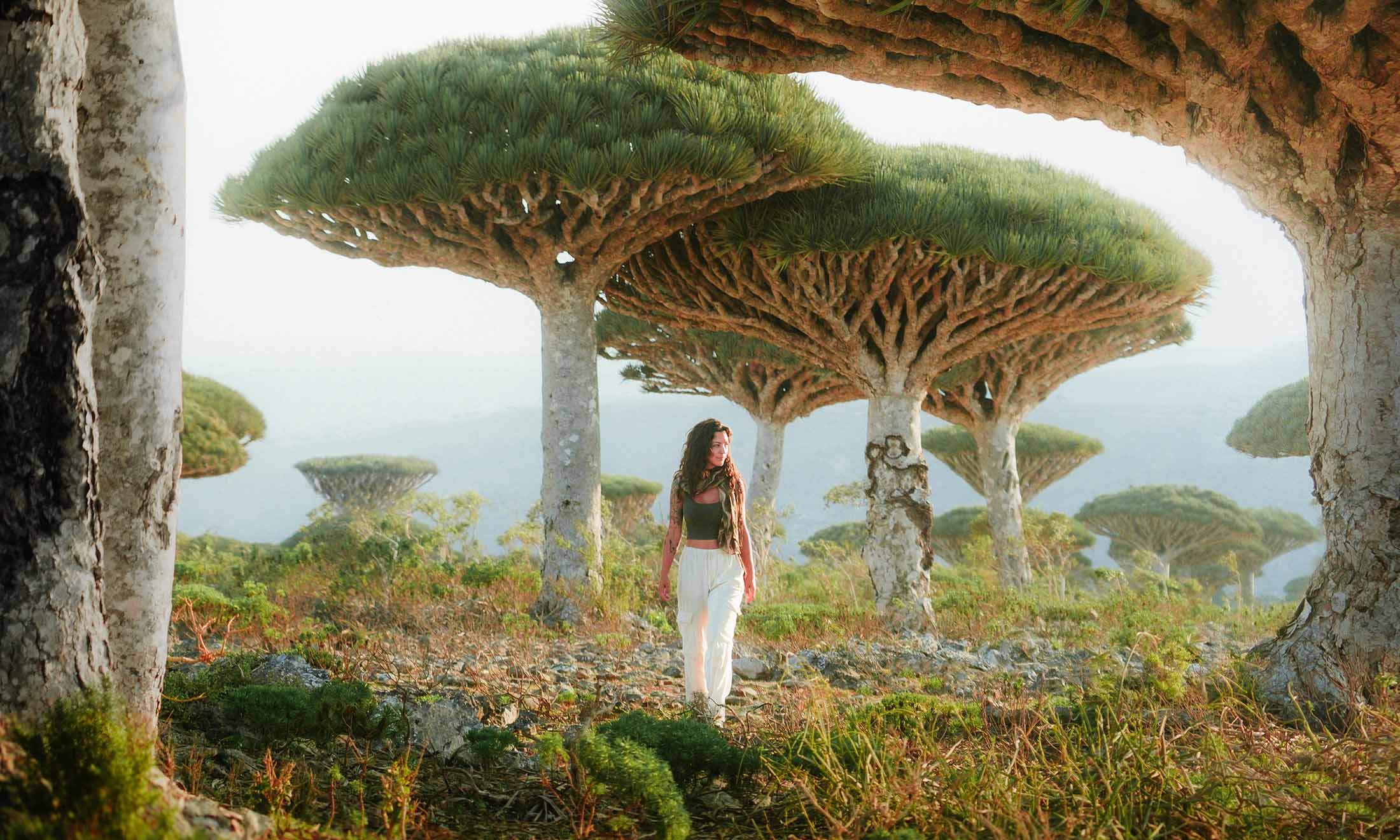
An introduction to Socotra’s biodiversity would be incomplete without mentioning its iconic trees. The Dragon Blood Tree, with its distinctive umbrella-shaped canopy and red resin, is one of the island’s most recognizable endemic species. Equally fascinating are the bottle trees, which are known for their unusual swollen trunks that help them store water in Socotra’s dry climate. These trees are both remarkable examples of how the island’s plants have adapted to their unique environment.
Want to learn more? Discover the famous Dragon Blood Tree forests of Socotra in our dedicated blog article.

Coastal Lagoons and Beaches
Socotra’s lagoons and beaches are important habitats for birds and other wildlife. The Detwah Marine Reserve, for example, is known for its ecological importance and is the only site in Yemen listed as a Ramsar Wetland Site. These coastal environments are closely connected to the surrounding land and sea. Plastic waste can be carried by wind, rainfall, and ocean currents into sensitive areas, affecting wildlife far from where the waste was originally discarded.

The Underwater World
Socotra’s biodiversity extends beneath the surface. The surrounding waters support coral reefs, fish, crabs, and other marine life. The Dihamri Marine Reserve is one location with rich marine biodiversity. Protecting these ecosystems means keeping the coastline clean and respecting marine habitats. What happens on land can have consequences underwater.

The Smaller Species That Make Socotra Unique
Some of Socotra’s most remarkable wildlife is easy to overlook. Reptiles, geckos, and land snails are important parts of the island’s natural heritage, and many of these species are found nowhere else in the world.
In fact, approximately 90% of the island’s reptile species and 95% of its land snail species are endemic.
These figures illustrate how distinctive Socotra’s wildlife is. Since many species are found only on the island, protecting their habitats is crucial. Damage to the local environment can have consequences for species with no equivalent populations elsewhere.
Socotra is also home to fascinating birdlife, including the Egyptian vulture. Learn more about the island’s unique wildlife and birds of prey.

Why Socotra’s Biodiversity Needs Protection
Due to its high number of endemic species, Socotra’s habitat protection is particularly important. One of the environmental challenges facing the island is plastic pollution, which threatens sensitive coastal and marine ecosystems.
How We Help Protect the Island
At Traveling Socotra, we believe tourism should have a positive impact on the places we visit. We combine practical environmental action, responsible travel practices, and environmental education to achieve this goal.

Protecting Socotra Through Responsible Travel
Through our Plastic Collection Initiative, we collaborate with local communities and travelers to remove plastic waste from Socotra’s beaches and marine reserves. During the 2025 to 2026 season, we collected 532 kilograms of plastic, bringing our total to 1,032 kilograms. In addition to cleanups, we encourage guests to leave no trace, respect wildlife, and take all waste with them. Our co-founder, Ali Yahya, supports environmental awareness through local school initiatives and collaborations with organizations, including UNESCO.
Read our dedicated blog post to learn more about our efforts to tackle plastic pollution in Socotra.

How You Can Help Protect Socotra
You can make a difference by following a few simple practices:
- Leave campsites and beaches clean by taking all your waste with you.
- Respect wildlife, vegetation, and fragile habitats.
- Choose responsible tours and participate in local conservation initiatives.
Socotra’s extraordinary biodiversity is something you truly have to experience for yourself. Every corner of the island has something special to discover, from the iconic Dragon Blood Trees to its unique wildlife, turquoise lagoons, and vibrant coral reefs. Join Traveling Socotra to explore this incredible natural wonder and help protect it for future generations. Discover our tours and start planning your Socotra adventure!